Threat Research
Warden-class tools that hunt malice in the open, and never run it.
Static-analysis threat intelligence for the open-source supply chain. These wardens sweep container registries and public repositories for malware, confirm it on the code's own evidence, and feed what they find to OpenSourceMalware. Nothing is ever executed.
KNÖRR
Malicious Container Intelligence · The Cargo Warden
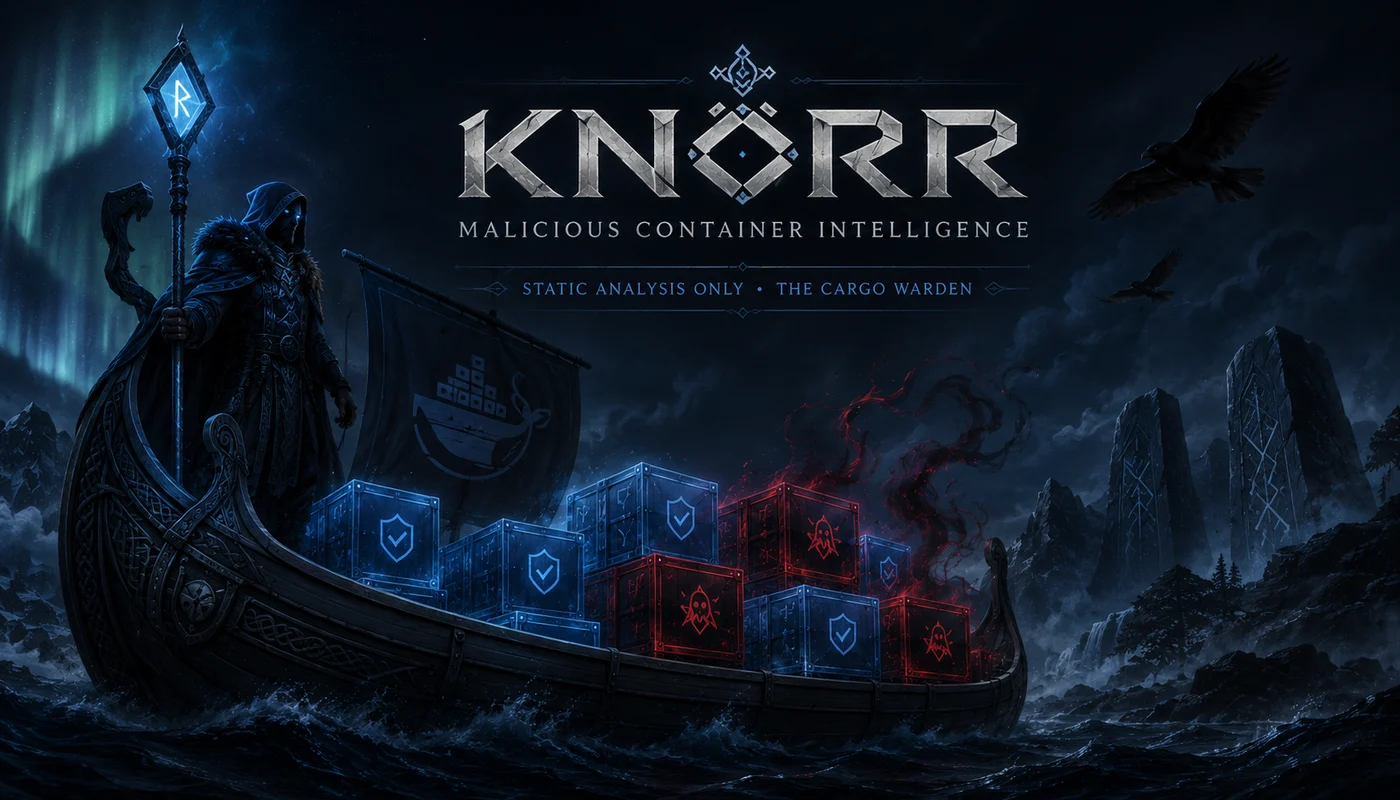
KNÖRR hunts malicious container images across Docker Hub and GHCR, and malicious Dockerfile code on GitHub before an image is ever published. It reads the cargo without ever opening it: static analysis only, nothing is executed.
The hunt runs in three passes. Discovery sweeps registries by miner family, coin name, and campaign signature, pivots on known-bad publishers, and flags typosquats a single character off a trusted name. Tier-1 screening scores each image from its manifest and config alone, with no layer pull, looking for baked-in mining pool and wallet strings, suspicious environment variables, and shell-spawning entrypoints. Tier-2 pulls layers only for the leads that whisper but do not shout, running Trivy across the SBOM and reading the strings in the deep.
One confirmed bad image becomes a full account audit: KNÖRR pivots on the owner and enumerates their whole fleet. Findings land in a SQLite ledger behind a read-only dashboard, and high-confidence hits can post to Discord and, with a human hand on the wheel, to OpenSourceMalware.
Git Warden
The Warden of Malicious Repositories and Code
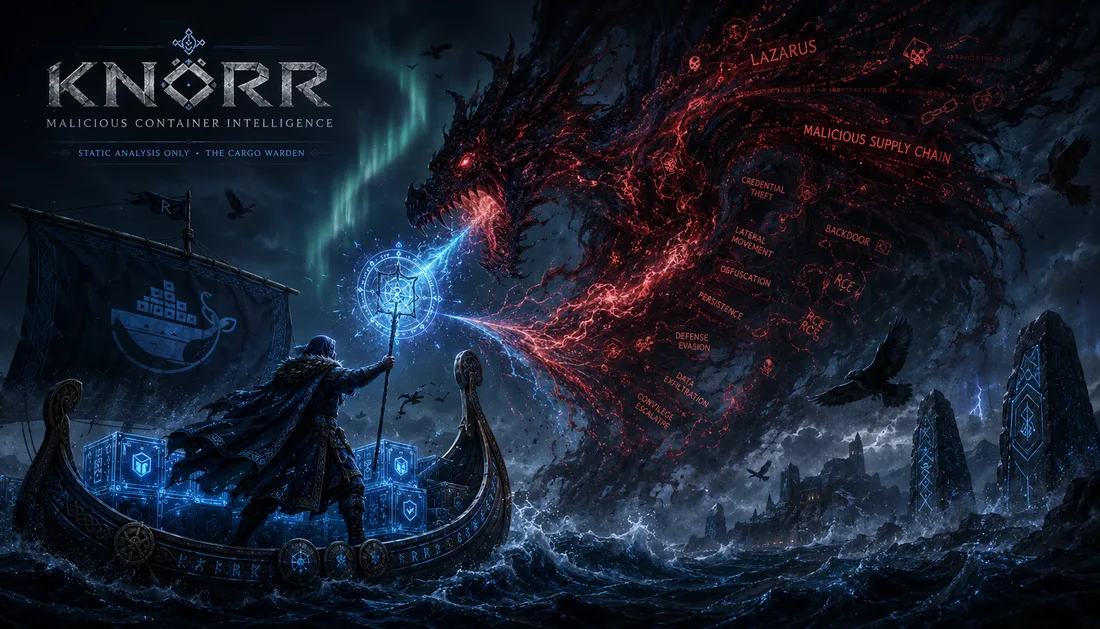
Git Warden is a defensive threat-intelligence engine that discovers, analyzes, and catalogs malicious GitHub repositories. Like the Warden it is named for, it cannot see; it listens for what code does. It never executes a target, reading the code statically and sensing the behaviors that betray malice.
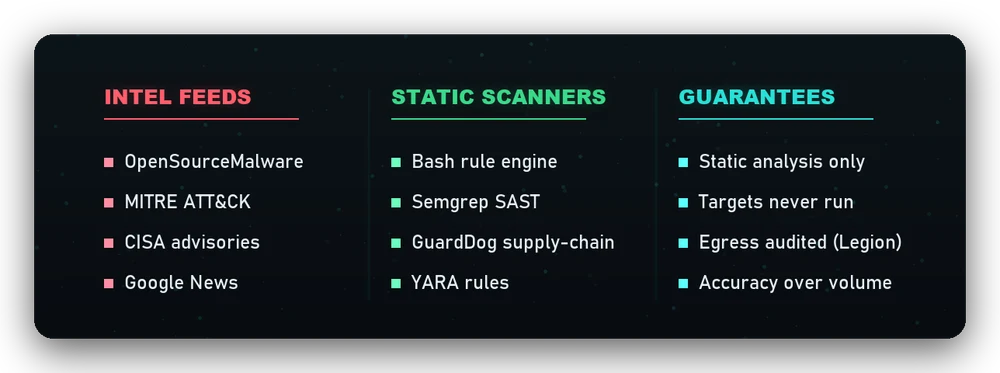
Provenance feeds (MITRE ATT&CK, CISA, Google News, and OpenSourceMalware) are breadcrumbs that seed who and what to hunt. A self-paced discovery layer finds candidate repos, then a two-tier static scan confirms malice on the code's own evidence: a Tier-1 name and README screen with homoglyph, typosquat, and security-tool guards, then a Tier-2 clone-and-scan with bash, manifest, and content scanners plus GuardDog and YARA.
A confidence tier is the spine. Only findings confirmed on a delivery, exfil, or dependency mechanism reach AUTO, the tier that earns a place on the Wall of Shame and the submit queue to OpenSourceMalware. Lone signals wait for a human in REVIEW, and recon or a security tool's own code is dropped. A golden fixture corpus gates precision in CI, so a rule change cannot quietly resurrect a false positive.
Research in the open
Both wardens are open source and static-only. They read the code, record what is true, and hand confirmed threats to the community. Read the source, run your own hunts, or contribute a rule.